In the ACT Framework, I have highlighted how Accuracy (Pillar 1) and Completeness (Pillar 2) are critical pillars of the foundation for reliable and actionable people data. The final pillar, Timely People Data, addresses a different but equally challenging aspect — ensuring data is current and relevant to prevent decisions based on outdated or incomplete insights. In this article, I delve into the nuances of how delayed updates impact organisations and offer actionable steps for improving data timeliness.
Why Timely Data Matters
Timely data is more than a checkbox; it is the lifeline for making accurate, efficient, and strategic decisions. As I have experienced, even the most accurate and complete data loses value if it is not updated promptly. When people data lags behind real-time HR data and organisational changes, the repercussions are severe.
To cite a few examples:
- Distorted Workforce Costs: One client discovered its total workforce cost was underestimated by 15% because updated compensation details for promoted employees weren’t recorded in the HRMS. This inflated projections delayed leadership approvals for critical hires, ultimately impacting a major expansion project.
- Workflow Disruptions: Another client’s failure to process HRIS data updates on time caused reporting mismatches, blocked leave approvals, and disrupted payroll processing. The HR team had to manually fix hundreds of approval bottlenecks, diverting time away from strategic tasks.
- Legal and Compliance Risks: Delays in updating demographic or role transitions increase exposure to compliance risk. This is a classic case where HR data governance and HR data management processes should uphold timing and accuracy to eliminate manual backlogs.
- Inaccurate Headcount Reporting: A few unclosed requisitions in an ATS inflated headcount figures, leading senior management to falsely assume teams were overstaffed, creating an unnecessary hiring freeze in revenue-critical roles.
Every delay reflects a form of HR data latency, where updates are out of sync and diminish decision accuracy. This lag directly reduces HR data quality and the overall confidence executives place in analytics and reporting.
Challenges in Maintaining Timely Data
While the importance of timely data is clear, HR teams face several hurdles:
- Siloed Systems: A lack of HR data integration between ATS, HRMS, and Payroll tools causes asynchronous updates and inconsistencies across platforms.
- Manual Processes: Over-reliance on manual entries slows the data freshness cycle and raises the risk of missing updates during key operational cycles, such as performance appraisals or compensation revisions.
- Event-Driven Delays: Changes triggered by promotions, exits, or onboarding often lag due to unstructured workflows and slow approvals.
- Dynamic Environments: Frequent reorganisations, mergers, or acquisitions complicate HR structures, introducing constant churn that restricts real-time HR data updates.
- Lack of Intent: One of the biggest gaps is the absence of systemic urgency. Organisations often undervalue how greatly HR data timeliness impacts payroll accuracy, compliance, and forecasting. Teams need stronger HR data governance mechanisms to connect data timeliness with operational outcomes.
Steps to Maintain Timely People Data
To overcome these challenges, HR teams can implement the following best practices to sustain HR data timeliness and accuracy:
- Establish Standardised Update Timelines: Define SLAs for lifecycle updates like new hires, promotions, exits, or compensation revisions. One organisation used a 48-hour SLA to process HRIS data updates, reducing payroll mismatches by 30%.
- Automate Data Updates Across Systems: Use APIs or middleware to enable HR data integration between systems like ATS, HRMS, and Payroll. Real-time syncing ensures data timeliness and reduces HR data latency by aligning all critical systems.
- Conduct Regular People Data Audits: Run recurring audits to monitor HR data quality and alignment. Quarterly reviews should verify structures, workflows, and reporting relationships to maintain data freshness and prevent information drift across teams.
- Create Event-Driven Update Triggers: Design workflows that trigger immediate updates upon promotions, transfers, or exits. Map dependencies across systems and schedule real-time HR data updates for business-critical events while batching low-priority edits.
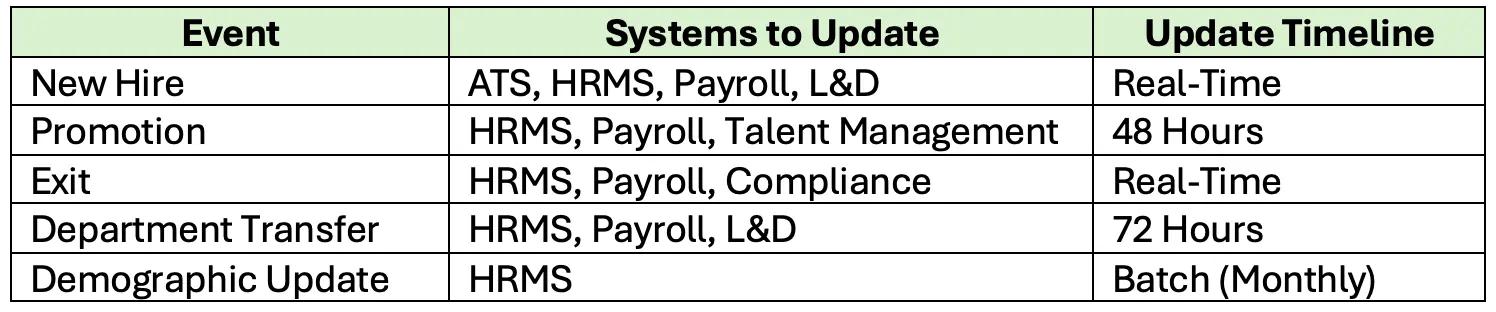
Event-Led Data Updates
5. Build Strategic and Technical Capabilities for Data Governance: Effective HR data management requires coordination between strategic oversight and technical execution. HRBPs ensure strategic validation of promotions, exits, and compensation records. Data Stewards uphold HR data governance, ensuring accuracy, timeliness, and consistency across platforms.
Together, these roles strengthen governance structures, reduce HR data latency, and promote sustainable data timeliness across the talent lifecycle.
Completing the ACT Framework
With Timely People Data, HR teams can access insights that are as current as they are accurate and complete. The ACT Framework—Accuracy, Completeness, and Timeliness—empowers organisations to build trust in their systems through effective HR data governance, smooth HR data integration, and dependable HR data management.
In the end, HR data timeliness is not just about speed; it’s about ensuring continuous data relevance. Keeping real-time HR data flowing improves workforce planning, reporting accuracy, and leadership confidence across every HR function.
Have you experienced similar challenges with outdated people data? How do you keep people's data updated to reflect current organisational realities?