
Many organizations believe their Human Resource Information System (HRIS) provides a single source of truth. This assumption can be risky. Most of us have faced situations where HR and Finance show different headcount numbers during board meetings. We’ve also seen payroll mistakes because data wasn’t synced properly between systems.
The reality is that your HRIS plays just one part in your data ecosystem. It’s not the neutral referee many think it is. This difference matters because viewing your HRIS as the final authority creates gaps in your HR data governance strategy. Smart organizations no longer force one system to be their source of truth. They build data governance frameworks that add a neutral validation layer to connect their HR systems.
This piece will show you why treating HRIS as the only source of truth doesn’t work. You’ll see five real examples that prove this point. We’ll also share a practical framework to build true data trust. Our step-by-step roadmap helps you deal with important aspects of HR data quality like accuracy and consistency. This creates a solid foundation that you can use to make decisions, ensure compliance, and run analytics.
Table of Contents
-
- The Myth: ‘If It’s in the HRIS, It’s True’
- 5 Failure Modes That Prove HRIS Isn’t Enough
- The Neutral Data Layer Framework for HR Data Trust
- Visual breakdown of the HR data trust architecture
- Implementation Roadmap for CHROs and HR Leaders
- Where Talenode Fits in the Hr Data Ecosystem
- Conclusion
- Key Takeaways
- FAQs
The Myth: ‘If It’s in the HRIS, It’s True’
Organizations often make a dangerous assumption. They believe all information in their HRIS platform must be accurate and reliable. This belief spreads through their decision-making and shapes everything from board presentations to its coverage of compliance. Notwithstanding that, blindly trusting your HRIS as the source of truth creates blind spots that weaken data integrity throughout your organization.
Why HRIS Excels at Transactional Data Capture
HRIS platforms excel at their original purpose: recording and processing employee transactions. These systems capture point-in-time events like new hires, promotions, and compensation changes effectively. Their transactional architecture will give a smooth operation of core HR processes, making them essential for daily operations.
HRIS platforms provide efficient workflows for standardized HR processes. They enforce data entry rules within their boundaries and maintain clean audit trails for system changes. This well-laid-out approach creates an illusion of completeness and accuracy that reinforces the myth that HRIS cannot fail.
Where HRIS Breaks Down: Cross-System Decision-Making
HRIS platforms show critical weaknesses when data needs to flow beyond system boundaries, despite their transactional strengths. This mismatch becomes clear in several ways:
Data model limitations – HRIS organizes information around employee profiles and HR tasks, not business outcomes or cross-functional metrics
Restricted data flow – These platforms excel at capturing data but struggle with bidirectional information sharing
Governance gaps – Most HRIS tools lack robust master data management capabilities beyond their immediate domain
Siloed data across HR systems creates multiple versions of “truth” that hurt decision-making. According to the factual keypoints, this fragmentation “guides to inefficiency, duplication, and compromised decision making.” Problems remain unresolved without assigned data stewards, while departments continue to use inconsistent definitions of simple concepts like “headcount,” “FTE,” and “active employee.”
Executive meetings highlight this problem clearly. Finance reports 1,542 employees while HR shows 1,487. Both teams reference “official” data, yet neither can explain the difference easily. Organizations without a neutral validation layer above individual systems face this scenario repeatedly.
Introducing the ‘Player Vs Referee’ Analogy
The difference between players and referees in sports helps explain the proper role of your HRIS. Players actively participate in the game and contribute valuable skills while pursuing their objectives within defined boundaries. Referees maintain neutrality, enforce consistent rules, and have no stake in the outcome.
Your HRIS is a player in your data ecosystem, not a referee. It represents one viewpoint among many systems, each with its own data model and business purpose. The HRIS excels at its role—managing employee records and transactions—but lacks the neutral position needed to intervene in data conflicts across systems.
Organizations need a true “referee” layer above individual systems that applies consistent business rules and validations. This neutral data governance framework must define canonical metrics, enforce data quality dimensions like accuracy and consistency, and provide transparent lineage for information flow between systems.
Decision-making across systems suffers without this referee function. Teams waste hours reconciling conflicting reports instead of gaining insights. Compliance risks grow as role-based access controls fragment across systems. Most importantly, executives lose trust in HR data with each unexplained discrepancy.
Only when we are willing to see our HRIS as a player rather than a referee can we establish true data governance in HR.
5 Failure Modes That Prove HRIS Isn’t Enough
Executive leaders expect precise answers from HR teams, but real-life data issues show the flaws in depending on just one system. The most sophisticated HRIS platforms have simple limitations that hurt data trust, no matter what vendors claim. Let’s get into the five most common failure modes that show why your HRIS can’t be the only source of HR truth.
1. Siloed Systems Create Multiple Versions of Truth
Your organization’s data lives in several disconnected systems—your HRIS, payroll platform, applicant tracking system, and various point solutions. Each system has its own database with limited ways to integrate. The data might line up at first, but differences show up as information moves (or doesn’t move) between systems.
To name just one example, see what happens during an employee’s department transfer. The change might be correct in your HRIS but fail to update in your payroll system because of timing issues or integration gaps. Finance reports then pull different numbers than HR dashboards, which creates confusion during key decisions. This happens because each system runs on its own update cycles and data models.
2. Inconsistent Definitions of ‘Headcount’, ‘Fte’, and ‘Active’
Simple HR metrics don’t have standard definitions across departments. Finance might see “headcount” differently than operations or HR. The questions pile up. Should we count contractors? What about employees on leave? Do part-time workers get weighted differently?
These definition problems create specific challenges with metrics like:
Full-time equivalents (FTE) – Some systems count based on scheduled hours, others on actual hours worked
Active employees – Systems handle leaves, probationary periods, and notice periods differently
Headcount – Systems vary in counting contingent workers, contractors, and employees on leave
Executive trust in HR data suffers without standard definitions across systems.
3. Missing Data Lineage Makes Metrics Hard to Trust
Your team should trace a metric’s origins quickly if someone questions it in a board presentation. Most organizations can’t do this. Missing data lineage—the documented path of how data moves between systems, transformations applied, and calculation methods—creates doubt.
Teams can’t answer simple questions like “Why does this report show 25 new hires when I approved 27?” Decision-makers can’t confirm their information’s accuracy without clear data trails from source to final report.
4. No Data Stewards Means Recurring Issues Go Unresolved
Problems keep coming back when no one owns specific data domains as a steward. HR data quality issues continue because:
Nobody owns cross-system data integrity
Quick fixes hide why it happens
Only certain employees know about data connections
Organizations solve the same problems repeatedly without building proper governance frameworks if they lack dedicated data stewards.
5. RBAC Inconsistencies Expose Sensitive Data
Managing role-based access control (RBAC) gets complex with multiple HR systems. Each platform’s unique permission model and access controls make consistent security policies almost impossible. This creates compliance risks and potential data exposure.
An employee might have proper access limits in your HRIS but too many permissions in your payroll system, creating regulatory risks. Whatever care you take with system permissions, these gaps pose major compliance risks, especially with sensitive employee data that needs strict access control.
Smart HR leaders solve these five failure modes by adding neutral data layers above their systems. This creates a true “referee” that ensures consistent definitions, confirms cross-system data, and provides the governance framework needed for trusted HR analytics.
The Neutral Data Layer Framework for HR Data Trust
Organizations struggle with HR data management despite traditional governance approaches. The solution lies in a new architectural element: the neutral data layer. This independent framework sits above HR systems and ensures consistent definitions, cross-system data integrity, and reliable metrics that drive decisions.
What Is a Neutral Data Layer in HR Governance?
The neutral data layer acts as the true “referee” in your HR data ecosystem, while your HRIS serves as just another player. This architectural layer operates independently above operational systems—HRIS, payroll, ATS, finance. It verifies data flows, enforces business rules, and solves discrepancies without favoring any system’s version of truth.
This approach differs from traditional master data management. It doesn’t need all data consolidated into a new warehouse or lake. The layer establishes governance rules, data stewardship processes, and reconciliation mechanisms that work with existing systems. Each system keeps its data model, yet the framework helps solve inevitable conflicts.
Defining Canonical Business Rules and Metrics
Clear canonical business rules and metrics are the foundations of effective HR data governance. These establish:
Standardized definitions for critical terms like “headcount,” “FTE,” and “active employee” that apply consistently across all systems
Calculation methodologies that document exactly how metrics derive from source data
Business logic that determines how special cases (contractors, employees on leave, etc.) should be handled
The neutral layer maintains documentation about data usage procedures. This documentation and clear communication channels promote collaboration between departments and teams that previously worked in isolation.
Automated Cross-System Validation and Quality Checks
Manual reconciliation becomes impossible as data volumes grow. The neutral layer framework solves this through automated validation that:
Continuously monitors data flows between systems
Flags mismatches based on predefined business rules
Captures data lineage to trace information from source to destination
Performs regular data audits with quality as a key strategic goal
Employee transfers demonstrate this well. The neutral layer confirms changes propagate correctly across affected systems. This prevents the headcount discrepancies common in manual processes. Regular monitoring helps organizations track their data location and content.
Reconciliation Workflows with SLAs and Escalation Paths
Discrepancies will occur despite automation. The neutral layer framework addresses these through well-laid-out reconciliation workflows:
Data stewards receive accountability for specific data domains. These stewards maintain their assigned areas and serve as initial contacts during issues.
Clear service level agreements guide resolution times for different data conflicts. Critical payroll issues need same-day fixes, while minor reporting inconsistencies allow longer timeframes.
Defined escalation paths help handle unresolved steward-level issues. Leadership gains visibility into systemic problems that need broader solutions.
Proper access controls limit data modification to authorized users during reconciliation. This maintains security throughout issue resolution.
Talenode can show you how it serves as a neutral data layer. It verifies HR data across systems, catches mismatches early, and provides your team with one governed version of metrics for payroll, analytics, and compliance. Book a demo today.
Visual breakdown of the HR data trust architecture
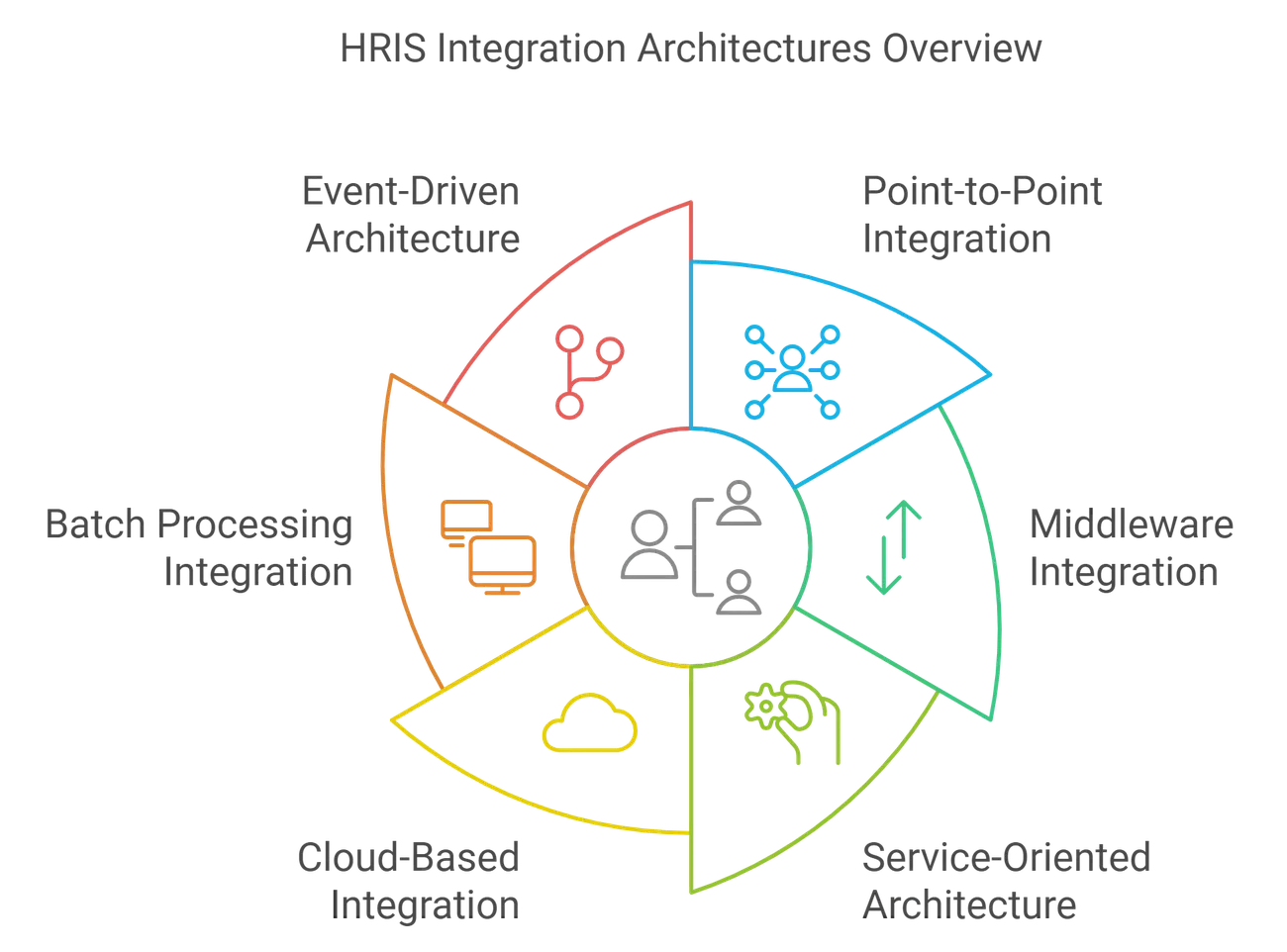
Image Source: Azilen Technologies
HR data flow visualization helps us understand how information moves between systems through a governed neutral layer. This architectural design tackles the biggest problems of isolated systems, mixed-up definitions, and missing data trails. It acts as a true “referee” that sits above operational platforms.
HRIS, Payroll, Ats, Finance Feeding into a Neutral Layer
A typical HR data ecosystem has information coming from several unconnected sources:
Core HRIS platform – Stores employee profiles, org structures, and job information
Payroll system – Manages compensation, benefits, and payment processing
Applicant Tracking System – Contains candidate data, job requisitions, and hiring workflows
Finance systems – Track budgets, allocations, and labor cost distributions
Systems that lack a neutral layer communicate through point-to-point connections. These connections don’t deal very well with keeping data consistent. The neutral layer design puts a dedicated governance layer between source systems and users of that data (reporting, analytics, compliance).
This design doesn’t need you to replace existing systems or move massive amounts of data. It sets up checkpoints that watch data flows, use business rules, and spot differences. The neutral layer:
Gets data from source systems through APIs or scheduled extracts
Uses canonical business rules to standardize definitions
Checks cross-system consistency using predefined rules
Keeps complete data trails from source to destination
Works as the authorized source for analytics and reporting
The neutral layer keeps unchangeable audit logs that track who accessed or changed data with timestamps—a vital feature for compliance and governance.
How the Neutral Layer Supports Compliance, Payroll, and Analytics
The neutral layer brings real business value to key HR functions:
For Compliance Teams: The neutral layer cuts down regulatory risks by a lot through consistent role-based access controls. It makes shared data handling possible by:
Making a list of all HR data (PII, credentials, case information)
Marking sensitivity and legal requirements
Creating access rules by classification
Setting up breach response plans with legal notification steps
For Payroll Operations: Payroll gets more accurate as the neutral layer catches data mismatches before they cause payment errors. To cite an instance, see when an employee changes departments in the HRIS but the change doesn’t reach payroll properly. The neutral layer spots this mismatch before wrong payments go through.
For Payroll & Reporting: The neutral layer provides trusted foundations for HR analytics by resolving definition conflicts. A board presentation needs headcount metrics that line up with finance numbers—the neutral layer will give a perfect match by using consistent business rules in all systems.
Yes, it is possible to implement this architecture in different ways. Some companies build a dedicated data warehouse with ETL processes. Others use modern data observability platforms that watch existing data flows without creating new storage.
Whatever implementation approach you choose, one principle stays the same: a neutral validation layer that works independently from any single system’s data model creates the trusted foundation needed for good HR data governance.
Implementation Roadmap for CHROs and HR Leaders
A neutral data layer framework needs a practical, step-by-step approach—most organizations don’t have enough resources for a complete governance overhaul. You should start small with visible wins and expand slowly as your organization starts trusting your data governance framework.
Start with 10–20 Board-Visible Metrics
Your HR data governance should begin with a small set of metrics to avoid unnecessary complexity. The most important metrics that your board and executive team review regularly should be your starting point:
Headcount and turnover by department
Time-to-hire and cost-per-hire
Compensation ratios and pay equity metrics
Diversity metrics to comply with reporting
Budget variance and labor cost analysis
These high-visibility metrics help you achieve two vital goals. You target areas where data inconsistencies cause immediate problems in executive presentations. Your early successes also help build confidence in your governance approach.
Research shows that “less than 10% of organizations have advanced data insights.” Poor data governance stands out as the main reason. A focused set of metrics builds momentum before you tackle bigger governance challenges.
Assign Data Stewards and Define Escalation Paths
Clear accountability structures make governance work. Data issues remain unsolved without clear ownership. Here’s how to solve this:
Make specific data stewards responsible for each data domain
Document their duties and authority clearly
Train them in data management principles
Create formal channels for teams to work together
You should also create structured escalation paths for issues. Include response time agreements based on how serious the problem is. Payroll problems might need same-day fixes, while reporting issues could wait longer.
The escalation plan should list who gets notified, response times, and required documentation. This transparency helps solve issues quickly.
Set Up Continuous Monitoring to Prevent Drift
Data governance programs need constant monitoring to stay effective. After setting up your framework, create automated systems that:
Track data quality across systems
Alert stewards when problems exceed limits
Document data history for audits
Create regular data quality reports
This monitoring stops small issues from becoming big problems. Looking at metadata and activity logs every quarter helps catch unusual patterns early.
“Employ continuous monitoring,” experts say, as this “will help organizations [understand] what data they have and where it is.” Regular checks ensure your governance framework stays strong as your organization grows.
Book a demo to see how Talenode works as a neutral data layer. It checks HR data across systems, spots mismatches early, and gives your team one reliable version of metrics for payroll, analytics, and compliance.
Data governance needs ongoing commitment from leadership. As your neutral layer grows stronger, expand beyond your starting metrics until you have detailed governance across your HR data ecosystem.
Where Talenode Fits in the Hr Data Ecosystem
Modern HR technology has given rise to specialized governance tools that solve the neutral layer challenge. Talenode stands out as a solution built to address data trust problems in HR operations.
Talenode as the Neutral Layer for HR Data Observability
Talenode acts as a vital “referee” in your HR ecosystem. It sits above operational systems to confirm data flows and enforce business rules. The platform doesn’t replace existing systems like traditional MDM approaches do. Instead, it monitors data quality across platforms, spots discrepancies, and keeps complete lineage for every field.
Mini-Story: HR Vs Finance Headcount Mismatch Before Board Meeting
The quarterly board meeting starts tomorrow. Your CFO asks why finance reports show 1,542 employees while HR dashboards display 1,487. Teams without Talenode scramble through spreadsheets to reconcile numbers. Teams with Talenode already know which 55 employees exist in different states across systems. They understand why the discrepancy exists and which definition applies to board reporting.
Mini-Story: Retro Payroll Corrections from Upstream Changes
A reorganization prompts HR to update department codes in the HRIS. These changes fail to sync properly with payroll and lead to incorrect labor allocations. Finance finds this error months later, making retroactive corrections expensive. Talenode stops this by watching cross-system consistency. Data stewards receive immediate alerts when department codes don’t match between systems.
Mini-Story: Compliance Exports Break RBAC and Create Risk
Your team pulls employee data for quarterly compliance reporting. They create spreadsheets with sensitive information without realizing it. These files spread through email and break role-based access controls. Talenode keeps permissions consistent across data flows. This ensures sensitive employee information stays protected throughout analytics and reporting.
Example stack: [Workday] + [ADP] + [Greenhouse] + [Power BI]
Talenode works naturally with common HR technology stacks:
Core HRIS (Workday, SuccessFactors, Darwinbox)
Payroll systems (ADP, Ceridian, local providers)
Recruiting platforms (Greenhouse, Lever, Workday Recruiting)
BI tools (Power BI, Tableau, Looker)
See how Talenode creates a neutral data layer in action. Book a demo to watch it confirm HR data across systems, catch mismatches early, and give your team one governed version of metrics for payroll, analytics, and compliance.
Conclusion
Organizations that treat their HRIS as the single source of truth end up trapped in endless loops to settle discrepancies. This piece shows how this misalignment creates real business problems. Board presentations show conflicting headcount numbers, costly payroll corrections happen often, and compliance risks emerge from inconsistent data access controls. These challenges shake executive trust in HR data and waste resources that could support strategic initiatives.
Moving forward needs a basic change in thinking. You must see your HRIS for what it really is – a valuable player in your data ecosystem, not the impartial referee. This difference matters by a lot because it accepts the natural limits of any single system. It also opens the door to a more resilient governance approach.
Data governance works best when a neutral validation layer sits above individual systems. This layer enforces consistent business rules whatever the information’s source. The approach settles the five failure modes we discussed – siloed systems, inconsistent definitions, missing lineage, absent data stewardship, and RBAC fragmentation.
The best way to start is small with 10-20 board-visible metrics. This creates momentum without overwhelming your team. The core team needs clear escalation paths to resolve issues quickly instead of ignoring them. Regular monitoring prevents the slow decline that can break down even well-designed governance programs.
Smart CHROs know that data trust isn’t just about technology – it’s a strategic must-have. Your team’s ability to provide accurate, consistent metrics directly shapes how executives view HR as a strategic function. When Finance and HR show similar headcount numbers from the same validated source, you close credibility gaps that hurt critical workforce decisions.
The neutral layer brings quick benefits to key stakeholders. Payroll teams spot problems before they cause payment errors. Compliance officers keep data access controls consistent. Executives get reliable metrics for strategic decisions without doubting the data quality.
Setting up this framework needs investment. But trying to settle conflicting data manually while hoping things improve costs nowhere near as much in the long run. Data trust builds the base for all strategic HR initiatives. Without it, even the best analytics and AI projects will struggle to deliver real value.
Your trip toward HR data trust starts when you see your HRIS for what it truly is – an excellent player, but never the referee your organization needs.
Key Takeaways
Your HRIS is a valuable player in your data ecosystem, not the impartial referee it’s often positioned to be. Treating it as the single source of truth creates blind spots that undermine data governance and executive trust.
• Stop treating your HRIS as the single source of truth – It’s a player, not a referee, with inherent limitations in cross-system decision-making and data validation.
• Implement a neutral data layer above all HR systems – This independent validation framework enforces consistent business rules and resolves conflicts without bias toward any single system.
• Start small with 10-20 board-visible metrics – Focus on high-impact metrics like headcount and turnover to build organizational confidence before expanding governance efforts.
• Assign dedicated data stewards with clear escalation paths – Without explicit ownership and structured workflows, recurring data quality issues remain permanently unresolved.
• Establish continuous monitoring to prevent governance drift – Automated validation and regular audits ensure your framework remains robust as systems and organizational structures evolve.
The five common failure modes—siloed systems, inconsistent definitions, missing data lineage, absent stewardship, and RBAC fragmentation—prove why organizations need a true “referee” layer that sits above individual systems to ensure data trust and enable strategic decision-making.
FAQs
Q1. Why Shouldn’t We Rely Solely on Our Hris for Hr Data?
While HRIS platforms are excellent at capturing transactional data, they have limitations when it comes to cross-system decision-making. Treating the HRIS as the single source of truth can create blind spots in data governance and undermine executive trust in HR data.
Q2. What Is a Neutral Data Layer in Hr Governance?
A neutral data layer is an independent validation framework that sits above all HR systems, including HRIS, payroll, and applicant tracking systems. It enforces consistent business rules, resolves data conflicts, and ensures data integrity across the entire HR ecosystem without bias toward any single system.
Q3. How Can Organizations Start Implementing Better Hr Data Governance?
Start by focusing on 10-20 board-visible metrics that are critical for executive decision-making. Assign dedicated data stewards for each data domain, establish clear escalation paths for resolving issues, and set up continuous monitoring to prevent data quality drift over time.
Q4. What Are Some Common Failure Modes in Hr Data Management?
Common failure modes include siloed systems creating multiple versions of truth, inconsistent definitions of key terms like “headcount” and “FTE”, missing data lineage, lack of data stewards to resolve recurring issues, and inconsistencies in role-based access controls across systems.
Q5. How Does a Neutral Data Layer Benefit Different Stakeholders in an Organization?
A neutral data layer provides numerous benefits across the organization. It helps payroll teams catch upstream inconsistencies before they cause errors, enables compliance officers to maintain consistent data access controls, and provides executives with reliable metrics for strategic decision-making without questioning the underlying data quality.