
Data governance in HR isn’t working. Companies claim to manage employee information with care, but nobody truly controls HR data. The situation becomes murky when “Workday is our system of record, but ADP is what payroll runs on.” The hard truth remains – data quality suffers because everyone shares responsibility yet nobody owns it.
The impact hits hard on the ground. Your HRIS might show an employee’s termination while payroll keeps them active. This creates retro pay issues and awkward conversations. Different department names in various systems make your headcount numbers clash with Finance’s data. Teams rush before board meetings because “we need numbers we can defend in the board deck.”
The problem goes beyond IT systems or technical limitations. Data governance frameworks fail in HR because teams distribute responsibility without clear ownership. Many organizations have governance policies on paper. The reality shows fragmented ownership, unclear steward duties, and poor HRIS payroll matching processes.
This piece explores why standard data governance tools don’t work for HR. You’ll learn what a proper three-role model (owner, steward, custodian) looks like and how to build a governance strategy that delivers results. We provide templates, ground examples, and a clear path to establish true accountability in your HR data ecosystem.
Table of Contents
-
- The Real Problem: Shared Responsibility, Zero Accountability
- The 3-Role Model: Owner, Steward, Custodian
- What HR Data Stewards Actually Do (Weekly Operating Rhythm)
- The Stewardship Charter Template (Copy/Paste)
- How Tools Make Stewardship Possible (And Not a Second Job)
- What Good Looks Like: A Mature HR Data Governance Model
- Conclusion
- Key Takeaways
- FAQs
The Real Problem: Shared Responsibility, Zero Accountability
“You can have all of the fancy tools, but if [your] data quality is not good, you’re nowhere.” — Veda Bawo, Director of Data Governance at Raymond James, HR data quality expert
Nobody wants to take the blame for HR data management problems. HR blames IT’s system limitations when employee records go wrong. IT points fingers at Payroll’s data entry mistakes. Payroll says they just do what HR tells them to. Your organization’s data quality gets worse while everyone plays this blame game.
HR Blames It, It Blames Payroll: the Accountability Gap
The root of this problem lies in how we handle data governance today. Teams share responsibilities but nobody truly owns the data. A 2024 Gartner Chief Data and Analytics Officer survey reveals that only 43% of organizations succeed with their data stewardship efforts. The biggest hurdle? Misunderstandings: IT sees data as a business issue, while business units think IT has it under control. Nobody really knows who should do what.
Your organization probably faces these challenges too. You might find yourself saying in meetings, “Workday is our system of record, but ADP is what payroll runs on.” This split between systems doesn’t excuse mismatched data. The setup actually proves a bigger point: systems that work separately need even stronger ownership.
On top of that, organizations face these hurdles:
Role Assignment: Picking specific stewards leaves gaps because many data users don’t feel responsible
Too Much Stewardship: Having too many stewards creates confusion about governance rules
Coverage Prioritization: Limited resources force tough choices about which data needs steward attention
Why Ownership Must Be Modeled, Not Assigned
Just putting someone’s name as “data owner” on a chart doesn’t fix anything. Data governance roles need people who show ownership through their actions, not just extra tasks on their plate.
Shaw Industries learned this lesson the hard way. They had many data stewards but no solid governance plan. Their data stayed in silos because managers stuck to old paper-based methods, even with fancy new titles.
HR data governance works best with three balanced roles:
Data Owner: A senior business leader who takes charge of data classification, protection, quality, and use. Your Chief People Officer or VP of HR fits this role – someone who can approve investments in data quality.
Data Steward: These experts know specific data sets inside out. They make sure data stays high-quality and follows the rules. Think compensation specialists handling salary data or HRIS administrators watching over employee records.
Data Custodian: IT pros who set up security and manage storage based on what Owners need. They don’t own the data but keep its technical home running smoothly.
The cost of unclear data responsibility in HRIS payroll reconciliation
Bad data governance hits hard in both money and operations. A terminated employee might still show up as active in payroll while HRIS says they’re gone. This mess creates expensive back-pay problems, compliance risks, and unhappy employees.
Different department names across systems mean your headcount never matches Finance’s numbers. Teams waste days making sure board presentation numbers add up. One CHRO put it straight: “We spend days preparing numbers we can defend in the board deck.”
Wrong worker types or locations make compliance reports unreliable. This creates audit risks and expensive fixes for regulatory reports.
The biggest cost isn’t time spent fixing mistakes – it’s lost trust in HR data. When executives doubt basic workforce numbers, they stop believing in your strategic plans. Data governance builds HR’s credibility as a strategic partner.
The 3-Role Model: Owner, Steward, Custodian
Data governance runs on clarity, not complexity. Business units, HR, and IT often have unclear responsibilities that create gaps. Data errors multiply quietly until they show up in board presentations or compliance audits. You need a framework that describes who’s accountable for what. A three-role model works especially when you have HR data.
Data Owner: Accountable for Policy, Risk, and Outcomes
Data Owners hold ultimate accountability for the data domain. They don’t handle daily operations but take responsibility for outcomes. Senior executives like your Chief People Officer or VP of HR usually take this role. They bring organizational insight and decision-making authority.
A manufacturing business shows this in action. Their Production Manager acted as Data Owner for all production data and appointed specific stewards for different data subsets. Your CHRO or VP of HR should:
Set data classification policies (determining what’s confidential versus public)
Accept risk responsibility for data breaches or quality issues
Approve investments in data quality improvement initiatives
Resolve escalated disputes between departments about data definitions
Combine data governance with organizational objectives and compliance requirements
Data Owners establish accountability and direction rather than managing data directly. This role needs business acumen and understanding of data’s role in achieving organizational goals.
Data Steward: Responsible for Quality, Definitions, and Triage
Data Stewards are subject matter experts who know specific data domains inside out. They put policies from Data Owners into action and serve as the operational center of governance. HR data stewards often include:
Compensation specialists (for salary and bonus data)
HRIS administrators (for core employee attributes)
Benefits coordinators (for healthcare and retirement data)
Talent acquisition teams (for candidate and recruitment data)
These stewards maintain metadata, document data context, establish definitions, monitor quality thresholds, and handle issues. To cite an instance, see how Data Stewards coordinate standardization efforts when department names differ across systems. This ensures headcount reports match Finance’s numbers.
Data stewards aren’t typically dedicated roles. These responsibilities combine smoothly into existing positions. In spite of that, clear stewardship duties remain crucial for governance success.
Data Custodian: Implements Controls and Access in HR Systems
Data Custodians handle the technical side of security, access controls, and storage infrastructure. IT professionals in these roles ensure proper data protection, backups, and availability to authorized users based on Owner and Steward policies.
Think of it like a bank vault. Your money stays in the vault, but the bank doesn’t own it—they just keep it safe. IT manages the infrastructure with employee data the same way, without controlling its use or quality standards.
HR contexts include these custodians:
IT administrators managing your HRIS platform
Database specialists overseeing payroll systems
Cloud engineers handling talent management applications
Security specialists implementing access controls
These roles maintain system availability, perform backups, implement security patches, and keep technical documentation current. Their work protects data integrity.
RACI Matrix for HR Data Governance
The three-role model needs a RACI matrix (Responsible, Accountable, Consulted, Informed) that maps who does what:
Activity | Data Owner | Data Steward | Data Custodian | Business User |
Define data strategy | A | C | I | C |
Establish data standards | A | R | C | I |
Implement security controls | A | I | R | I |
Maintain data quality | A | R | C | R |
Resolve data issues | A | R | C | I |
System maintenance | I | C | A/R | I |
This matrix eliminates the blame game between HR, IT, and Payroll. A well-laid-out approach prevents scenarios where “HRIS says terminated; payroll still active.” You’ll avoid retro pay fixes and escalations that plague HR data environments with poor governance.
What HR Data Stewards Actually Do (Weekly Operating Rhythm)
A dedicated data steward works behind the scenes as the unsung hero of clean HR datasets. They maintain accurate, consistent, and trustworthy employee information through weekly routines. These professionals rarely work in dedicated roles – you’ll find them as HRIS analysts, HR operations specialists, or compensation managers who handle stewardship alongside their main duties.
Maintain metadata for job level, worker type, and cost center
HR data stewards dedicate roughly 20% of their time to metadata maintenance—the context that makes HR data meaningful. Their work has these key aspects:
Documenting definitions for job levels across different business units to ensure consistency
Proving right the worker type classifications (full-time, contractor, temporary) to support compliance reporting
Standardizing cost center naming conventions between HR and Finance systems
Inconsistent department naming across systems creates headcount reports that “don’t match Finance.” This forces rushed reconciliation before leadership meetings. Smart stewards prevent such issues by creating clear naming standards and system synchronization processes.
Monitor data quality thresholds and escalate issues
Weekly stewardship activities rely on data quality monitoring:
Checking exception reports for data anomalies (incomplete records, mismatched fields)
Evaluating key metrics against 3-month-old thresholds (error rates below 2%)
Escalating critical issues to data owners when quality drops below acceptable levels
Stewards run weekly reports to spot employees whose status is different between systems. They quickly escalate cases where “HRIS says terminated; payroll still active” to prevent retro pay issues and uncomfortable employee situations. Data governance experts point out that these proactive checks turn reactive firefighting into systematic prevention.
Run Change Control for Reorgs, New Fields, and Integrations
Organizational changes pose major data governance risks. Smart stewards:
Create data migration plans for departmental reorganizations
Verify data integrity before and after structural changes
Document field definitions when adding new attributes to HR systems
Test integration points when connecting new applications
Poor change control makes worker type or location fields inconsistent. This creates compliance reporting errors and substantial audit risk. Data stewards act as gatekeepers to ensure changes follow governance protocols instead of creating new data silos.
Coordinate with HRIS and Payroll for Data Fixes
The most visible part of stewardship involves system coordination. The statement “Workday is our system of record, but ADP is what payroll runs on” shows why data stewards matter so much.
Successful coordination requires:
Running weekly reconciliation meetings between HRIS and Payroll teams
Documenting data correction procedures for common scenarios
Tracking resolution of high-priority discrepancies
Building relationships across technical boundaries
Data stewards bridge the gap between technical and business teams where accountability often falls short. They help organizations move beyond assigning responsibility by modeling accountability through consistent action.
These weekly rhythms help HR data stewards turn data governance from theoretical frameworks into real results. Teams can now produce “numbers we can defend in the board deck” without last-minute panic. The operating rhythm creates a foundation to scale governance as organizations grow and data becomes more complex.
The Stewardship Charter Template (Copy/Paste)
A well-documented charter is the life-blood of successful HR data stewardship. Your best intentions can fail when departments disagree or priorities move without this foundation. The charter acts as both shield and guidebook. It protects stewards during conflicts and clarifies their exact domain.
Purpose and Scope of the HR Data Steward Role
A well-laid-out data steward charter defines clear boundaries to prevent accountability gaps. Your charter should spell out:
Primary mission: Ensuring data quality and consistency across HR systems
Data domains: Specifying which employee attributes fall under stewardship (compensation, performance, demographics)
Authority limits: You retain control by knowing when stewards can make independent decisions versus needing approval
Time allocation: Setting aside time for stewardship activities (typically 15-25%)
Good charters acknowledge that stewardship blends into existing positions rather than being a standalone role. Your charter must set realistic expectations for stewards who juggle these duties with their main job responsibilities.
Sample Charter Language for Enterprise Data Governance
Here’s template language you can adapt to your organization:
HR Data Stewardship Charter
The HR Data Steward is responsible for ensuring the classification, protection, use, and quality of human capital data in accordance with standards established by the Data Owner. The steward serves as subject matter expert with thorough understanding of HR data elements, their definitions, and their proper usage across enterprise systems.
Appointment Process: Data Stewards are appointed by the HR Data Owner based on subject matter expertise and position within the organizational hierarchy. Appointments will be reviewed annually and updated automatically upon reorganizations that alter reporting structures.
Core Responsibilities: The Data Steward will:
Maintain metadata documentation for assigned data domains
Monitor data quality thresholds and address anomalies
Coordinate data corrections between HRIS and Payroll systems
Implement data governance policies established by the Data Owner
Support change management for system transitions and reorgs
Escalation Paths and Decision Rights
Your charter must outline clear decision boundaries and escalation protocols to work well. Stewards should know exactly when to raise issues to Data Owners—usually when they find:
Data quality issues affecting multiple departments
Conflicting definitions between Finance and HR systems
Security concerns or potential compliance violations
Resource needs beyond allocated time commitments
A clear escalation path turns vague accountability into practical action. Teams can get stuck debating responsibility without this structure, leaving issues like “HRIS says terminated; payroll still active” unresolved.
How to Line Up with Your Data Governance Framework
Your stewardship charter connects to your broader governance framework. Success requires:
Committee Integration: Charter should detail how stewards work with your Functional Data Governance Committee to represent HR data domains.
Documentation Hierarchy: Show where the charter fits in your governance documentation. One organization puts it this way: “The hierarchy is (1) Policy, (2) Standards, and (3) Procedures” with stewardship charters at the standards level.
Cross-Functional Recognition: IT, Finance and other departments must acknowledge the charter’s authority. This stops excuses like “Workday is our system of record, but ADP is what payroll runs on” from creating inconsistent data.
Note that your charter needs regular updates. Annual reviews help it evolve with your organization. This ensures stewardship stays relevant instead of becoming paperwork that nobody follows.
How Tools Make Stewardship Possible (And Not a Second Job)
Data stewards need more than good intentions and spreadsheets to succeed. The right tools make stewardship part of their regular duties instead of an extra burden. Quality tools have become essential as data volumes and complexity grow. Your team needs these tools to maintain data quality efficiently.
Why spreadsheets and manual audits fail
Spreadsheets create a false sense of control while making data problems worse. Manual audits often miss differences between systems, particularly with large employee datasets in multiple HR platforms. These manual processes don’t work in most organizations because:
They depend on occasional instead of continuous monitoring
They cannot handle organizational growth
They lack standard validation rules
They create new problems through version control issues
Spreadsheets widen the accountability gap where “IT thinks data is a business problem, while business thinks IT is managing data adequately.”
Using Data Governance Tools for Exception-Based Management
Good data governance platforms help stewards focus on specific exceptions rather than overwhelming manual reviews. Stewards can now concentrate on anomalies that need human judgment.
These tools spot problems when “Workday is our system of record, but ADP is what payroll runs on” creates conflicts. They flag cases automatically where “HRIS says terminated; payroll still active” before causing retro pay problems. Stewards get alerts about these exceptions instead of searching for issues manually.
Talenode as a Data Governance Platform for HR
Talenode tackles HR data governance challenges with purpose-built validation rules and workflows. Unlike generic data tools, it understands HR-specific data connections like manager hierarchies, compensation bands, and worker classifications.
Book a demo to see how Talenode gives HR data stewards automated checks, alerts, and audit-ready visibility. This ensures accountability and keeps data clean.
Automation for continuous validation and correction
Automation turns data stewardship from an occasional task into an ongoing process. Without doubt, this change represents the most important step in making stewardship sustainable within existing roles.
Automated validation tools provide:
Up-to-the-minute alerts when data crosses quality thresholds
Workflow routing to appropriate stewards based on data domain
Audit trails documenting corrections and approvals
Scheduled reconciliation between HRIS and payroll systems
These features help you deliver “numbers we can defend in the board deck” without last-minute rushes. Good tools make stewardship both possible and practical within your current organization.
What Good Looks Like: A Mature HR Data Governance Model
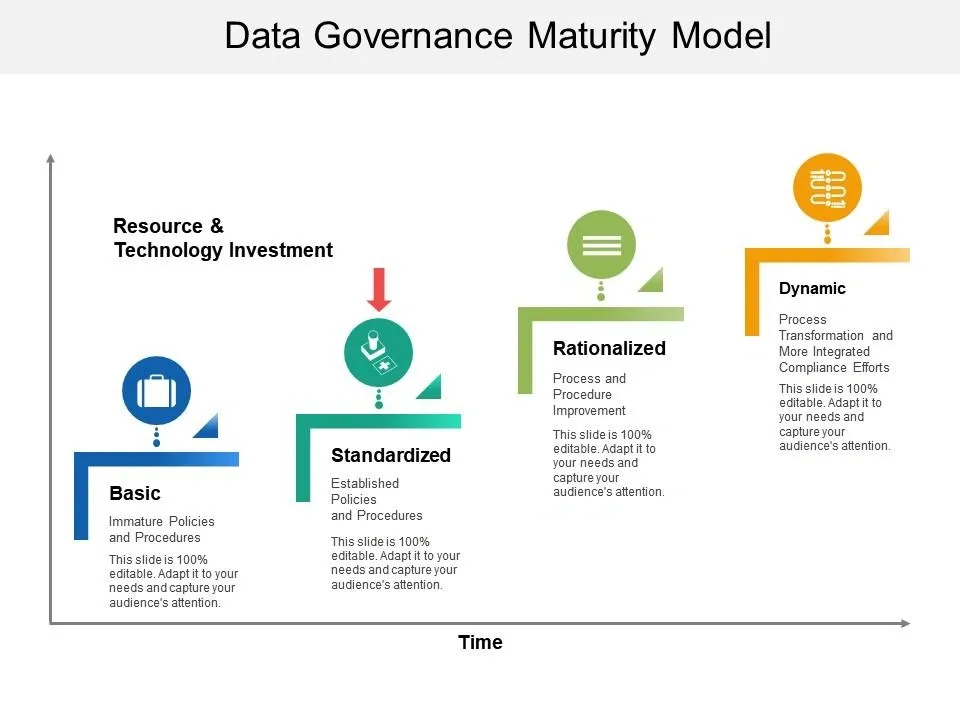
Image Source: SlideTeam
“HR will not be replaced by data analytics, but HR who do not use data and analytics will be replaced by those who do.” — Nadeem Khan, People Analytics Author, expert in data-driven HR transformation
A mature HR data governance model works like a well-oiled machine instead of disconnected processes. Your organization will stop fighting data fires and start preventing them once you reach governance maturity. This change reshapes the scene by turning constant reconciliation headaches into strategic advantages.
Defined Roles and Responsibilities Across HR, IT, and Finance
Detailed RACI matrices help set clear boundaries in mature governance frameworks. Successful organizations document the accountability for each data element that crosses departmental lines. This documentation prevents excuses about misalignment between systems like “Workday is our system of record, but ADP is what payroll runs on.”
Automated Quality Checks and Alerts
Critical issues often slip through manual audits. Mature models use exception-based management through automated validation rules to monitor thresholds continuously. These systems flag cases like “HRIS says terminated; payroll still active” right away. Data stewards can focus on fixing problems rather than finding them.
Integrated Data Governance Software with HRIS
Your HR systems connect directly with governance tools to create a centralized dashboard for monitoring data quality. This integration allows up-to-the-minute data validation against established rules without manual exports or reconciliation. Book a demo to see how Talenode gives HR data stewards automated checks, alerts, and audit-ready visibility. The system ensures accountability stays real and data remains clean.
Ongoing Stewardship Training and Support
Data governance needs continuous development to succeed. Organizations with mature systems train their stewards formally and provide documentation resources. They create communities of practice where stewards share challenges and solutions. The training covers technical skills and change management techniques that help overcome resistance to data standards.
These practices will help you deliver “numbers we can defend in the board deck” confidently. You won’t face the last-minute scramble that plagues immature governance models anymore.
Conclusion
HR data governance isn’t about building perfect systems—it’s about establishing clear accountability. In this piece, we’ve seen how shared responsibility without accountability creates an environment where bad data runs on. Your organization then faces errors that get pricey when “HRIS says terminated; payroll still active” or department names differ in systems of all types.
HR data governance that works needs more than spreadsheets and good intentions. A clear three-role model stands essential where owners take accountability for outcomes, stewards manage quality, and custodians maintain technical environments. This structure eliminates the accountability gap where “HR blames IT, IT blames Payroll” while nobody fixes the mechanisms at play.
Data stewardship charters turn vague responsibilities into concrete actions. These charters combine smoothly with existing roles instead of treating governance as extra work. They provide clear escalation paths when problems cross departmental boundaries.
Many organizations don’t deal very well with simple data alignment despite having sophisticated HR systems. They haven’t addressed a fundamental governance question: who truly controls your HR’s data? Your statement that “Workday is our system of record, but ADP is what payroll runs on” highlights exactly where governance needs to bridge technical divisions.
Inaction comes at a substantial cost—not just in retro pay corrections and compliance risks but in lost credibility when executives question your numbers. Strategic HR initiatives lose momentum when simple workforce metrics appear unreliable.
Without doubt, mature HR data governance needs both structural changes and technological support. Exception-based management through automated validation turns overwhelming manual audits into focused work on records that need attention.
The time invested in proper governance pays off through eliminated reconciliation efforts, reduced compliance risk, and stronger credibility with leadership. Stop accepting data quality as an inevitable challenge and start treating it as a solvable governance problem.
See how Talenode gives HR data stewards automated checks, alerts, and audit-ready visibility to keep accountability real and data clean. The right governance framework and supporting tools help you deliver “numbers we can defend in the board deck” without the frantic last-minute scramble that undermines HR’s strategic value.
Key Takeaways
HR data governance fails when responsibility is shared but accountability is absent. Here’s what you need to know to establish true control over your HR data:
• Implement the 3-role model: Assign Data Owners (accountable for outcomes), Data Stewards (manage quality), and Data Custodians (maintain systems) to eliminate the blame game between HR, IT, and Payroll.
• Create formal stewardship charters: Document clear responsibilities, decision rights, and escalation paths to prevent situations where “HRIS says terminated; payroll still active” lingers unresolved.
• Automate exception-based monitoring: Replace manual spreadsheet audits with continuous validation tools that flag data discrepancies before they become costly retro pay problems.
• Establish weekly stewardship rhythms: Data stewards should maintain metadata, monitor quality thresholds, coordinate system fixes, and manage change control as integrated parts of existing roles.
• Invest in purpose-built governance tools: Generic solutions can’t handle HR-specific relationships like manager hierarchies and compensation bands—specialized platforms prevent governance from becoming a burdensome second job.
The real cost isn’t just fixing errors—it’s the erosion of trust when executives question basic workforce metrics. Mature HR data governance transforms constant reconciliation headaches into strategic advantages, enabling you to confidently deliver “numbers we can defend in the board deck” without last-minute scrambles.
FAQs
Q1. Who Is Responsible for HR Data Governance?
HR data governance involves multiple roles working together. The Data Owner (typically a senior HR executive) is accountable for overall data strategy and policies. Data Stewards, often subject matter experts within HR, are responsible for maintaining data quality and definitions. Data Custodians, usually IT professionals, implement technical controls and manage systems. This three-role model ensures clear accountability across the organization.
Q2. What Are the Key Components of Effective HR Data Governance?
Effective HR data governance includes clearly defined roles and responsibilities, automated quality checks and alerts, integrated governance software with HRIS systems, and ongoing stewardship training. It also involves establishing data standards, maintaining metadata, monitoring quality thresholds, and coordinating data corrections between systems. A formal stewardship charter and RACI matrix are crucial for clarifying accountability.
Q3. How Can Organizations Improve Their HR Data Quality?
Organizations can improve HR data quality by implementing exception-based management through automated validation tools, establishing weekly stewardship rhythms, and investing in purpose-built governance platforms. Regular reconciliation between HRIS and payroll systems, clear change control processes for organizational changes, and continuous monitoring of data quality thresholds are also essential practices.
Q4. What Are the Consequences of Poor HR Data Governance?
Poor HR data governance can lead to costly errors, such as payroll discrepancies and inaccurate headcount reporting. It can result in compliance risks, audit issues, and erosion of trust when executives question basic workforce metrics. Additionally, it can hinder HR’s ability to function as a strategic partner and undermine the credibility of HR initiatives due to unreliable data.
Q5. How Does Data Governance Differ Between HR and Other Departments?
While data governance principles are similar across departments, HR data governance has unique challenges due to the sensitive nature of employee information and complex relationships between data elements. HR governance must account for specific data types like compensation, performance metrics, and demographic information. It also requires close coordination between HR, IT, and Finance to ensure consistency across multiple systems and compliance with labor regulations.