
Data trust issues plague people analytics teams today. Their dashboards often show incorrect information. This isn’t due to malicious intent but stems from a fundamental data trust gap that hurts HR’s credibility in organizations.
The reality is stark. People analytics professionals waste 80% of their time just cleaning data, leaving only 20% for actual analysis. Everyone knows the signs. Finance teams come up with different headcount numbers than executives see in their reports. Data inconsistencies delay key insights. Leaders make strategic decisions based on unreliable information. These problems point to what we call the “Data Trust Gap.”
A solution exists in HR data observability. This isn’t just another addition to your tech stack. It represents a complete strategy that treats HR data like a product that needs data accuracy, quality control and constant monitoring.
This piece explains how observability is different from simple monitoring. You’ll learn about the five pillars that make it work for HR data and practical implementation steps. Our goal is to help you change your people analytics from questionable to indispensable by showing exactly what is data observability in an HR context.
Table of Contents
The HR Data Trust Gap: Why Dashboards Lie
Trust issues with HR data plague organizations worldwide. Executives receive conflicting numbers from different departments and question which version represents reality. This simple breakdown in data reliability creates what experts call the “Data Trust Gap” – a critical disconnect that weakens HR’s strategic value.
Executives Don’t Trust Headcount Reports
“The Finance team shows 2,734 employees, yet HR reports 2,891. Which number is correct?” Leadership meetings across organizations face this scenario daily. HR and Finance’s data inconsistency creates a credibility crisis for people analytics teams.
Data flowing through disconnected systems causes this problem. Each department maintains its own version of employee information. Finance might classify contractors differently than HR, while managers keep shadow spreadsheets with their own counts. So executives question even simple workforce metrics during critical decisions.
Research shows 81% of people analytics leaders face ethics and privacy concerns with their evidence-based projects. About 70% of employees can access data they shouldn’t see. These governance gaps weaken confidence in HR’s coverage capabilities and highlight the need for robust data quality monitoring.
Why 80% of Time Is Spent Cleaning, Not Analyzing
People analytics professionals face a tough reality: they spend most of their time fixing data problems instead of delivering strategic insights. This 80/20 split (80% cleaning, 20% analyzing) happens because of several key problems:
- Inconsistent Data Entry: Different teams entering information in varied formats
- Field Changes Without Notice: The ATS suddenly changes “Candidate Source” to “Source_ID”
- System Integrations Breaking: Fivetran or Stitch jobs fail to update data
Missing mandatory fields: Incomplete manager information breaks org charts
Organizations try to fix these problems through periodic manual audits or simple monitoring tools that flag blank dashboards. In spite of that, this reactive approach fails to identify why these problems happen.
One HR data expert explains that monitoring shows only the time something breaks, while observability reveals why it broke. To cite an instance, a monitoring alert might show “the turnover dashboard is empty,” while observability would tell you “the dashboard is empty because yesterday the ‘Termination Reason’ field in Workday changed to a mandatory dropdown, breaking the data pipeline.” This is where modern data observability tools and data observability solutions become essential.
How the Trust Gap Affects Decision-Making
Unreliable HR data’s collateral damage goes way beyond minor inconveniences. Teams spend weeks reconciling numbers before presentations, which delays insights. Leaders default to gut feelings rather than evidence-based analysis in this culture of mistrust.
Strategic workforce decisions suffer the most serious effects. These real-life consequences tell the story:
Missing demographic data stalls diversity and inclusion initiatives before board meetings. Finance and HR’s disagreement on current staffing levels turns headcount planning into guesswork. Inaccurate resignation patterns make retention strategies miss their mark.
Organizations try to solve these problems by launching a “Single Source of Truth” (SSOT) initiative, usually adding another dashboard. Without proper data observability, this “Truth” becomes “Stale Truth” or “Partial Truth” as data quality issues continue undetected.
The solution requires treating HR data as a strategic product rather than an afterthought. Organizations need clear ownership, service-level agreements (SLAs), and data quality observability priorities at each pipeline stage. A radical alteration from reactive monitoring to proactive observability matters most and is one of the core data observability benefits.
Monitoring vs Observability: What’s the Difference?
Data monitoring and observability can make a huge difference in your HR insights quality. Many teams mix up these concepts, yet understanding their difference will completely change how you approach data quality and reliability in people analytics.
Monitoring Is Reactive: Spotting Symptoms
Your basic alarm system is what data monitoring represents—it tells you when something breaks without explaining why. HR analytics monitoring shows up as simple dashboard checks or automated alerts that flag issues after they happen.
Picture this scenario: Your quarterly diversity report shows blank fields suddenly. A monitoring system just tells you “The diversity dashboard contains null values.” This notification helps but only points to the symptom of a deeper issue.
Traditional monitoring approaches in people analytics include:
- Threshold Alerts: Notifications when metrics exceed normal ranges
- Dashboard Freshness Checks: Warnings when data hasn’t updated on schedule
- Completeness Validations: Flags when required fields are missing
Monitoring asks “Is something wrong?” but doesn’t give you tools to understand what happened or why. Your team must scramble to break down problems after they affect reporting and decision-making.
Observability Is Proactive: Finding Root Causes
A different approach comes with observability. It gives context and visibility into the entire data ecosystem instead of just detecting problems. This enables root cause analysis and forms the heart of any effective data observability framework.
That same diversity reporting issue becomes a solvable problem with observability: “The diversity dashboard contains null values because the API connection to your ATS stopped working at 2:15 AM when field names were updated during system maintenance.”
The main difference lies in collecting the right telemetry data throughout your HR data pipelines.
Observability platforms capture:
- Metadata Changes: When field names or data types change
- Process Timing: When specific data loads occur and how long they take
- Dependency Mapping: How different systems and data flows connect
- Historical Patterns: What normal data volumes and distributions look like
Observability strengthens your people analytics team to diagnose issues before executives notice problems, unlike monitoring’s reactive stance. This proactive approach helps build trust in your HR data ecosystem and showcases data observability best practices in action.
Why Both Are Needed, but Not Interchangeable
Monitoring and observability work best together in your people analytics strategy, despite their differences. Your first line of defense is monitoring—it alerts you to immediate issues needing attention. Observability then provides context to fix those issues efficiently.
Here’s a simple way to see it: monitoring tells you that headcount numbers don’t match between HR and Finance systems. Observability shows exactly where the discrepancy started and why the numbers diverged.
Organizations using both create a virtuous cycle:
- Monitoring catches immediate data quality issues
- Observability provides context to fix quickly
- Root causes get fixed, preventing future problems
- Data trust grows as consistency improves
Many organizations invest heavily in monitoring tools without addressing observability. This creates alert fatigue—teams become overwhelmed with notifications about problems they can’t fix efficiently.
This difference becomes crucial especially when you have critical people analytics workflows like compensation planning, diversity reporting, and headcount reconciliation. These high-stakes scenarios need more than just problem identification—understanding exactly what happened and how to fix it quickly becomes essential to maintain executive trust.
People analytics teams can change from constantly firefighting data issues to ensuring data quality across the HR ecosystem by implementing both monitoring and observability practices on top of a capable hr data observability platform.
The 5 Pillars of HR Data Observability
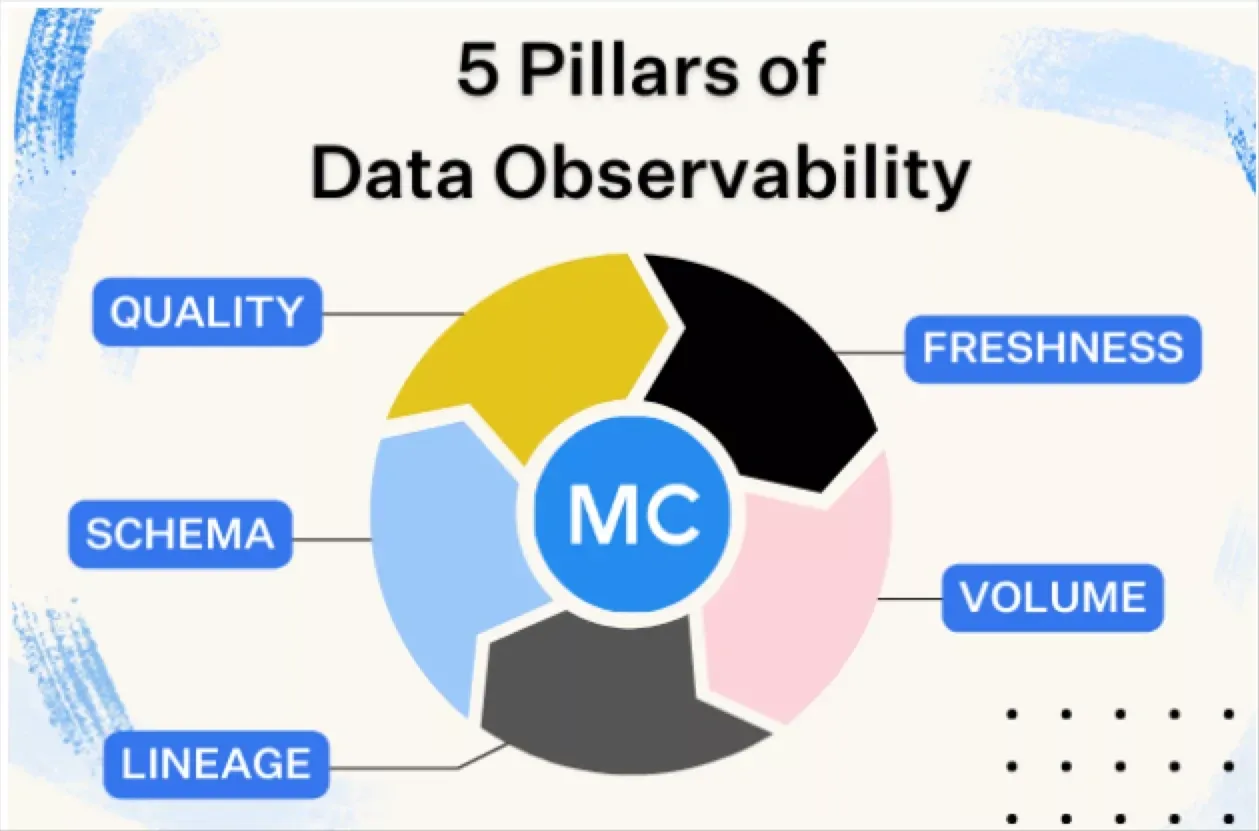
Image Source: Monte Carlo
HR data observability relies on five key pillars that work together. These pillars help keep your people analytics trustworthy and actionable. A detailed framework helps teams spot, diagnose, and fix data problems before they affect important workforce decisions and is central to any data observability platform.
Freshness: Is the Data Current?
Data freshness tells you if your information is current or outdated. Stale information can lead to expensive mistakes for people analytics teams, especially in urgent matters like payroll or headcount planning.
Freshness tests watch for data updates and notify you when information stops refreshing as expected. To name just one example, see what happens when your HRIS typically updates employee records daily but stops for three days – freshness monitoring would catch this right away.
HR teams often find outdated information after they’ve made important decisions with stale data. Picture a case where departed employees keep showing up in active headcount reports because termination data wasn’t synced properly. This can lead to budget overstatements and compliance risks.
Volume: Are Records Missing or Duplicated?
Volume observability keeps track of record counts in your datasets. It spots unexpected changes that point to data completeness issues. In HR, this could show up as missing employee files or duplicate entries that make headcount numbers look bigger than they are.
Row count tests catch data accuracy problems when information doesn’t copy correctly from source systems to your warehouse. Volume monitoring spots issues like ghost employees or missing new hires in reports.
Companies without volume checks often struggle when Finance and HR headcounts mysteriously differ by dozens or hundreds of employees.
Schema: Have Field Names or Types Changed?
Schema observability tracks structural changes in your data – different field names, new data types, or columns that appear or disappear. These small technical tweaks often cause big problems in HR reporting.
Column count tests find missing fields or unexpected schema changes. Schema monitoring would alert you if your ATS changed “Candidate_Source” to “Source_ID.” This prevents broken integration pipelines and gaps in recruitment analytics.
Simple system updates can trigger schema changes without warning. People analytics teams might waste days figuring out why their diversity dashboards suddenly show blank fields after a minor vendor update.
Distribution: Are Values Within Expected Ranges?
Distribution observability checks if your data values make sense statistically. This helps find outliers, data entry mistakes, and processing issues that might slip through the cracks.
Distribution tests look at various statistical measures. They include mean, median, minimum, maximum values, and more complex metrics like standard deviation and interquartile range. These tests catch wrong data entries, database bugs, and transformation logic issues.
HR teams use distribution checks to spot unlikely scenarios. Examples include 500 people hired in one department overnight (probably a bulk upload mistake) or compensation figures showing impossible negative values.
Lineage: What Breaks When Something Changes?
Data lineage shows how different parts of your people analytics system connect and depend on each other. Teams can see how upstream changes affect downstream systems.
Lineage tracking shows which dashboards, reports, or metrics might stop working if a field changes. Changes to job codes in your HRIS could unexpectedly disrupt DE&I reporting, compensation analytics, and headcount forecasts.
Teams without lineage mapping react to problems after executives notice missing information. Good lineage observability lets teams warn about potential issues and fix them before stakeholders see any problems.
These five pillars build a resilient foundation for reliable, available, and trustworthy people analytics. They turn data quality checks from manual audits into an automated, continuous monitoring system that catches issues early and illustrate the real-world data observability benefits.
Why Observability Is Key to a Single Source of Truth (SSOT)
Organizations rush to set up a Single Source of Truth (SSOT) for their people data. They miss a vital fact: without proper observability, this promise falls flat. The idea sounds great—one trusted location for all HR data. Yet reality often disappoints.
SSOT Without Observability Is a False Promise
Calling a dashboard or system your “Single Source of Truth” might sound good in executive meetings. Without observability practices backing it up, these words mean nothing. Research shows 81% of people analytics leaders face ethics and privacy concerns with their data-led projects. More than 70% of employees can access data they shouldn’t see.
The biggest problem lies in data quality degradation over time. Your carefully built SSOT drifts from reality when:
- Source systems change field definitions without notice
- Integration pipelines break silently
- Data entry practices vary across departments
- Schema changes occur during vendor updates
Most organizations try periodic manual audits or simple monitoring. These reactive approaches don’t fix the root causes of data drift. Just calling something a “source of truth” doesn’t make it true—only constant verification can do that.
How Observability Keeps Your SSOT Reliable
Everything in maintaining SSOT integrity depends on treating data as a product. This means clear ownership for each data product and Service Level Agreements (SLAs) that set expectations for data availability, freshness, and quality.
Critical people data might need 99%+ uptime or freshness guarantees with quick response times. Data must update by a specific hour each day. For less important information, 95% freshness might be enough.
Organizations must track two key metrics to meet these SLAs:
- Coverage – what percentage of work to be done tests/monitors are in place
- Health – what percentage of those checks are passing now
Build the Single Source of Truth You Can Actually Trust – Move beyond reactive monitoring. See how Talenode detects schema changes, fixes anomalies, and delivers board-ready metrics without the manual cleanup.
Observability maintains SSOT reliability through automated testing at various pipeline stages. The best approach uses layered testing that lines up with your data architecture:
- Source layer tests catch issues at data ingestion points
- Staging layer tests confirm transformations work correctly
- Data mart/output tests confirm business rules and critical metrics
This approach stops bad data from spreading through your HR ecosystem and protects your SSOT’s integrity, especially when implemented using dedicated data observability tools.
Avoiding Stale or Partial Truths in HR Data
Stale or partial truths in HR data come from delayed updates and incomplete information. Both shake executive confidence in people analytics.
To curb staleness, freshness tests watch when data updates last occurred. Teams get alerts when information doesn’t refresh on schedule. To cite an instance, if your HRIS usually updates employee records daily but stops for three days, freshness monitoring flags this anomaly right away.
Volume tests help find missing or duplicate records by tracking count changes in datasets. These tests catch cases where data copies incorrectly from source systems to your warehouse. This prevents scenarios where terminated employees stay active in payroll reports but show as terminated in your HRIS.
It also helps to establish clear ownership for accountability. The core team should take responsibility for maintaining quality in every important data product. This team handles data incidents, tells stakeholders about issues, and fixes problems.
A good data health strategy needs custom observability. Each business environment differs, so organizations must shape data observability around their needs. They set test frequencies, thresholds, and alert sensitivities that match how they update and use data. This is where specialized data observability solutions tailored to HR can be especially valuable.
Your SSOT becomes real when you treat HR data with the same care and quality control as any critical product.
Real-World Use Cases for HR Data Observability
HR data observability provides real benefits in specific scenarios that business leaders care about. Data-driven decision making becomes reliable and trustworthy at the time organizations implement it properly.
DE&I Reporting: Catching Missing Demographic Data
Diversity reporting creates unique data challenges because demographic information often has gaps. Organizations find missing data only after executives question incomplete board reports without proper oversight. Distribution and nullness tests flag unusual patterns in demographic fields automatically. These patterns include sudden increases in “Prefer Not to Say” responses or incomplete race/ethnicity data.
A Fortune 500 company’s schema observability tests identified their ATS stopped transferring demographic data during a system update. The team fixed the pipeline before quarterly diversity reporting thanks to early detection. This saved them from potential compliance issues and helped maintain executive trust.
Payroll Leakage: Identifying Ghost Employees
“Ghost employees” cost organizations money through simple monitoring oversights. These individuals remain active in payroll systems but show as terminated in HR systems. Volume tests that compare headcount between systems flag these discrepancies automatically.
Distribution tests catch suspicious patterns like employees with similar bank details or missing standard deductions. Organizations identify these anomalies before major financial losses occur by implementing volume checks between HRIS and payroll systems.
Org Design: Ensuring Manager Fields Are Complete
Accurate reporting relationships form the foundations of organizational redesigns, yet manager fields often cause problems. Nullness tests track the percentage of null values in manager ID fields and alert teams immediately if these critical relationships break.
Broken org charts, inaccurate span-of-control metrics, and flawed succession planning result from incomplete manager fields. Schema observability detects field name changes (like “Manager_ID” becoming “SupervisorID”). This preserves lineage across systems and maintains organizational integrity during restructuring.
Headcount Accuracy: Arranging HR and Finance
The classic “Finance versus HR headcount” dispute comes from inconsistent data definitions and out-of-sync system updates. Freshness tests keep headcount data current across both functions. Volume checks identify discrepancies right away.
Organizations establish clear SLAs around data freshness by implementing observability between Finance and HR systems. To cite an instance, a healthcare provider reduced monthly headcount reconciliation time from three weeks to three hours. They achieved this through automated data health scoring and lineage tracking between their HRIS and financial planning systems.
These use cases show how observability ended up transforming people analytics from a questioned resource into a strategic asset. Simple data reliability improvements close the trust gap rather than complex algorithms, demonstrating the concrete data observability benefits for HR and people analytics teams.
How to Implement HR Data Observability
A methodical approach works best to implement HR data observability that values results over perfection. Your reliable data pipelines should support key business decisions.
Start With High-Impact Pipelines
Your most critical data flows need identification first—especially ones that feed executive dashboards or compliance reports. Your original focus should target payroll accuracy, headcount reconciliation, and DE&I reporting pipelines. These pipelines need freshness and volume tests to catch quality issues quickly and should follow proven data observability best practices.
Use People Analytics Tools with Observability Features
The right platforms should give you schema monitoring, distribution analysis, and lineage tracking. The best tools adapt to your specific needs and offer customizable test frequencies and thresholds. Your source data update frequency matters—daily HRIS data might need daily tests, while up-to-the-minute systems need more frequent checks.
Set SLAs And Assign Data Ownership
Data should be treated as a product with clear accountability. Each important data asset needs an identified owner who takes responsibility for quality and maintenance. Your Service Level Agreements should set expectations for data availability, freshness, and accuracy—maybe even 99% uptime for critical payroll data versus 95% for less urgent metrics.
Track Data Health Score and Alert Thresholds
Your metrics should monitor both coverage (percentage of required tests in place) and health (percentage of passing checks). Alert sensitivity needs customization to prevent notification fatigue. Questions about implementation? Reach out to
Ankit@talenode.ai
for specialized guidance on choosing and configuring data observability platform capabilities.
Conclusion
Data observability represents a fundamental change in how people analytics teams approach their work. Teams no longer accept the frustrating 80/20 split between cleaning and analyzing data. Organizations now have a clear path to build reliable HR insights that executives trust.
The Data Trust Gap undermines HR’s strategic credibility when dashboards show conflicting information. Without doubt, this gap exists because of disconnected systems and reactive approaches to data quality, not bad intentions.
Monitoring and observability have a significant difference. Monitoring only alerts you when dashboards break. Observability gives you the context to understand why issues occur and how to fix them proactively. Your teams can respond faster to data problems before they affect critical business decisions.
Organizations create a detailed framework that catches issues at their source by implementing the five pillars—freshness, volume, schema, distribution, and lineage. These pillars ensure your people data stays current, complete, structurally sound, statistically valid, and properly connected across systems, forming the backbone of any modern hr data observability strategy.
A true Single Source of Truth needs ongoing verification through observability practices. Your SSOT can quickly deteriorate into stale or partial truths that executives question rather than trust without proper data health monitoring.
Real-life applications show how observability transforms specific HR functions. Teams catch demographic data gaps early to make DE&I coverage more reliable. Ghost employees get flagged automatically to reduce payroll leakage. Manager fields receive proper validation to maintain org chart integrity. The chronic headcount disagreements between Finance and HR can be resolved through consistent definitions and synchronous updates.
This experience needs focus rather than perfection. Your team should start with critical data pipelines, establish clear ownership and SLAs, and expand observability coverage gradually. Your team will change from constant firefighting to proactive data management over time.
Data observability changes people analytics from a questioned resource into a strategic asset. This happens through fundamental reliability improvements that close the trust gap, not complex algorithms. HR truly earns its seat at the strategic table when executives trust your dashboards and see the value of a well-implemented hr data observability platform built on sound observation method for data collection principles.
Key Takeaways
HR data observability transforms people analytics from reactive firefighting to proactive strategic insights that executives actually trust.
- 80% of people analytics time is wasted on data cleaning – Implement observability to shift focus from fixing broken dashboards to delivering strategic insights
- Monitor five critical pillars: freshness, volume, schema, distribution, and lineage – These pillars catch data issues at their source before they impact executive reporting
- Single Source of Truth requires continuous verification – Without observability, your SSOT becomes stale or partial truth that undermines credibility
- Start with high-impact pipelines like payroll and headcount reconciliation – Focus on critical data flows that feed executive dashboards and compliance reporting
- Assign clear data ownership with SLAs – Treat HR data as a product with defined accountability, uptime guarantees, and quality standards
The path from questionable to indispensable people analytics lies in proactive data quality management that prevents the trust gap before it undermines HR’s strategic value and showcases the full potential of modern data observability solutions.
FAQs
Q1. What Is HR Data Observability and Why Is It Important?
HR data observability is a comprehensive strategy that treats HR data as a product deserving of quality control and continuous monitoring. It’s important because it helps close the data trust gap, ensuring that HR dashboards and reports provide accurate, reliable information for strategic decision-making.
Q2. How Does Data Observability Differ from Basic Monitoring?
While monitoring simply alerts you when something breaks, observability provides context about why it broke. Observability is proactive, helping to identify root causes of data issues, whereas monitoring is reactive and only spots symptoms after they occur.
Q3. What Are the Five Pillars of HR Data Observability?
The five pillars of HR data observability are freshness (is the data current?), volume (are records missing or duplicated?), schema (have field names or types changed?), distribution (are values within expected ranges?), and lineage (what breaks when something changes?).
Q4. How Can HR Data Observability Improve DE&I Reporting?
HR data observability can significantly improve DE&I reporting by automatically flagging unusual patterns in demographic fields, such as sudden increases in “Prefer Not to Say” responses or incomplete race/ethnicity data. This helps ensure more accurate and complete diversity reports.
Q5. What Steps Should Organizations Take to Implement HR Data Observability?
To implement HR data observability, organizations should start with high-impact pipelines, use people analytics tools with observability features, set Service Level Agreements (SLAs) and assign data ownership, and track data health scores and alert thresholds. It’s important to begin with critical data flows and gradually expand coverage.